

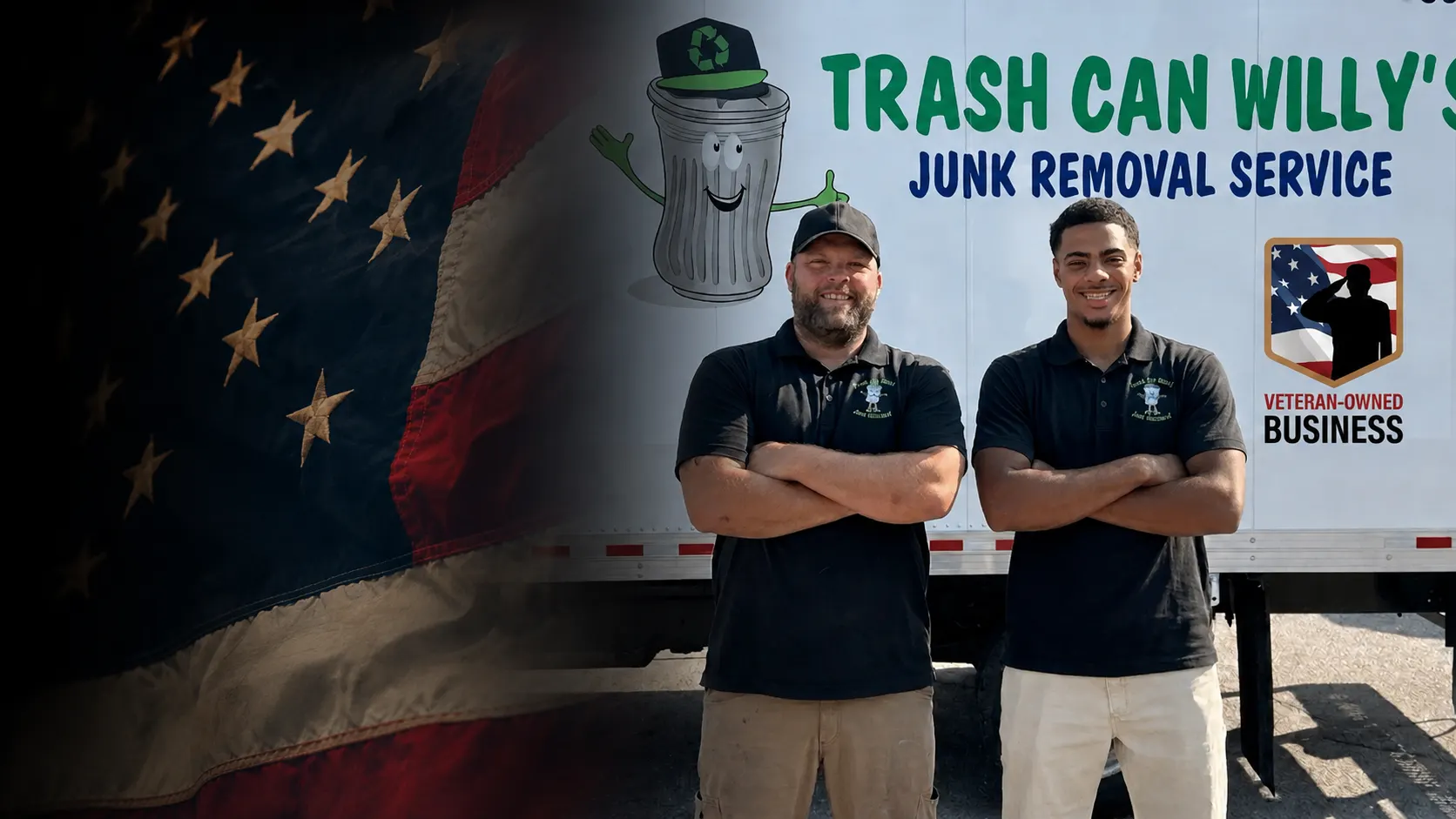
Junk Removal
in NH & MA
Why us?
- You point to your junk and we remove it from where it sits
- One item to a full property cleanout, starting at $35
- Licensed and insured, with a two hour window and a call 20 minutes out
You Point, We Haul
Loading, lifting and sweep-up included
Two-Hour Windows
Courtesy call 20 minutes before we arrive
You Approve First
The exact price is confirmed before we start
Up to 85% Recycled
Donated or recycled, not landfilled
Why Us
Why Choose Trash Can Willy's for Junk Removal
No job is too large or small, you name it we haul it all. We handle the lifting, loading, hauling, sorting, recycling, donation and disposal, so you do not have to lift a finger.
You point, we haul
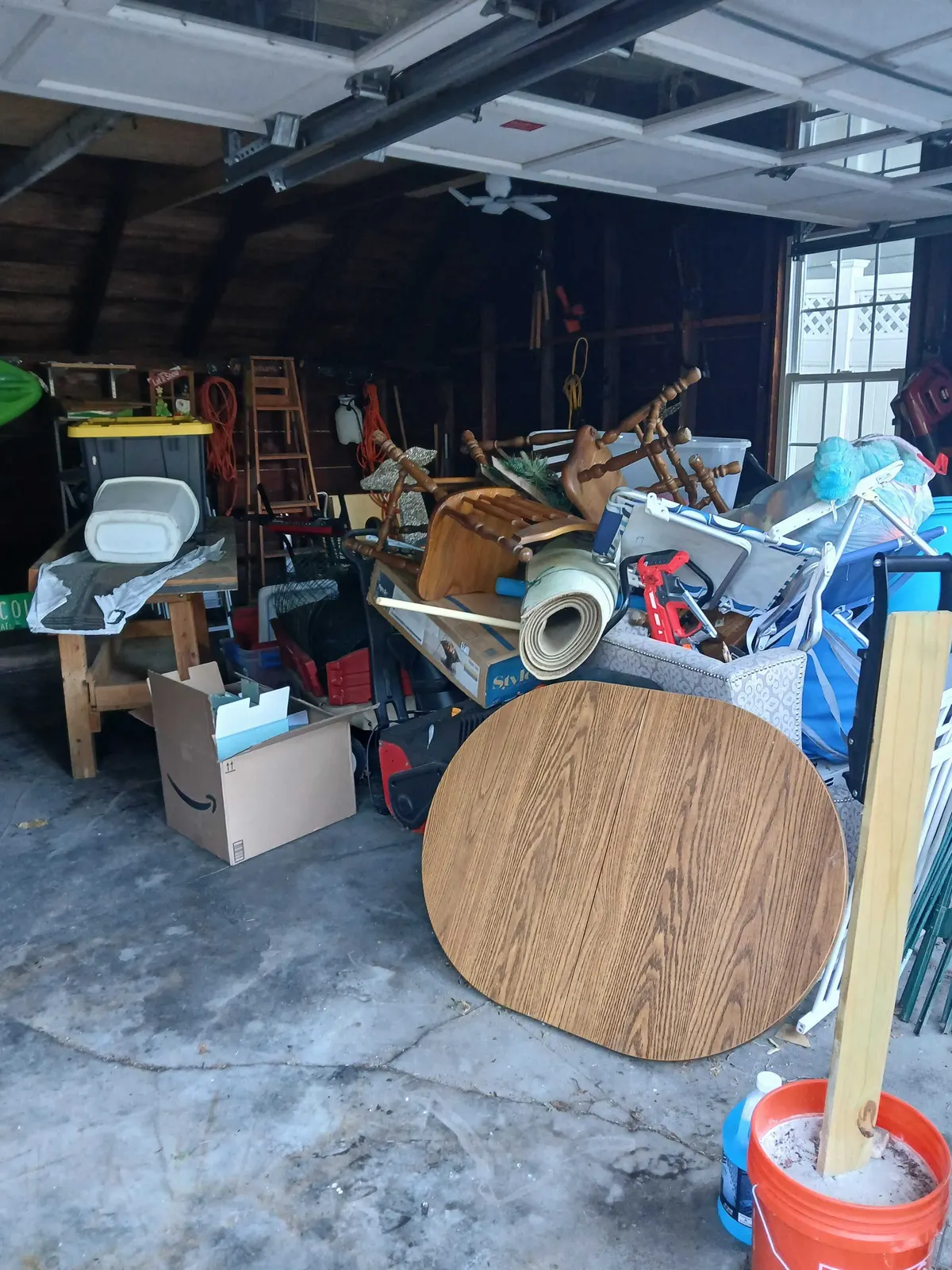
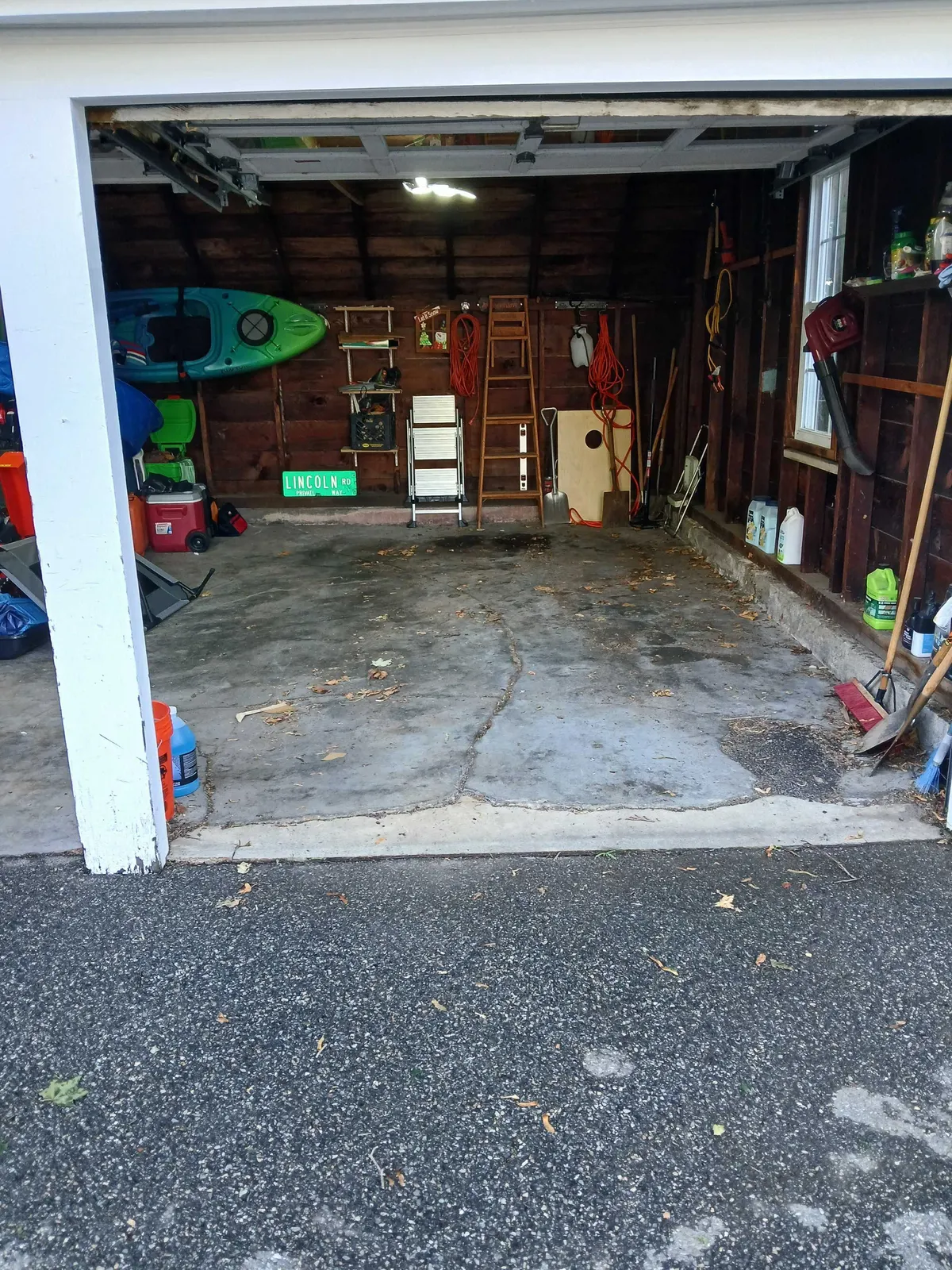
You just point to your junk and we remove it from where it sits. Nothing has to come to the curb, nothing has to be piled up first. Our crew carries it up from the basement, down the attic stairs and out through the door, then sweeps the space before we pull away. We work through all weather.
We specialize in large cleanouts
We specialize in large residential, estate and whole property cleanouts that many standard junk haulers will not take on. Attics, basements, garages, hoarding situations, evictions and whole houses are all work we do.
The largest trucks in NH and MA, so fewer trips
We use the largest trucks in NH and MA. A bigger box means fewer trips to unload and a lower disposal cost, and we pass that back to you.
Priced on the work, not the air in the truck
Most junk removal companies charge by how much truck space you use. Bricks or feathers, packed tight or full of air, you can pay the same simply because it takes up the same space. We price the actual job: weight, labor, difficulty and access. And our trucks are huge. Three of many competitors' trucks can fit inside one of ours, which means fewer trips to unload, less time spent dumping and lower costs we can pass on to our customers. Your price is approved before anything moves and doesn't change afterward. Plus, we beat any written quote.
We recycle or donate up to 85% of what we haul
In 2025 alone we recycled more than a million pounds of scrap metal and passed thousands of usable items on, much of it to the Epilepsy Foundation, Goodwill, the Salvation Army and local soup kitchens. When a job turns up a meaningful amount of that, it comes off your price, so the sorting works in your favor twice.
A real crew, in uniform, fully insured
Two or three of us show up depending on the size of the job, with the largest trucks in New England behind them: three of a competitor's trucks fit inside one of our 20-foot boxes. Background-checked, uniformed, trained personnel who watch your corners, your carpets and your floors on the way out. US DOT 2420455, proof of insurance on request.
Local. Veteran-owned. No franchise fees.
Steve built Trash Can Willy's on the same principles he learned in the military: show up when we say we will, honor our quote, communicate clearly and leave your property better than we found it. We're local, not a franchise. No call centers, corporate runaround or franchise fees built into your price. We're BBB A+ Accredited, licensed and insured, and a portion of every job supports Wounded Warrior Family Support. Fair pricing. Great communication. No stress. Just a job done right.
Our Reviews
4.9★ across 1,640 reviews.
Real reviews from real jobs across Southern New Hampshire, Greater Boston and the Merrimack Valley.

Carrie Gajowski
Google review
★★★★★3 days ago
It was great overall! Quick and efficient and a good price. Will use again if needed in the future!

Colleen E
Google review
★★★★★4 days ago
Had a great experience a few months ago with this company. They were so polite and courteous to me. I was worried about what was going to happen and they walked me through all of it and made it so easy and reasonably priced. I am going to use them again very soon. Highly recommended to anyone.

Kendra Jackson
Google review
★★★★★5 days ago
Dylan and Nick were polite, professional and lightning fast! I highly recommend Trashcan Willy’s!!!!!

Meg Birnbaum
Google review
★★★★★6 days ago
I'm very pleased with my experience with Malakai and Felix. They were friendly, fast, calm and efficient. Wht more could you ask for? The price for removal was also very reasonable and fit my budget.

Peg S
Google review
★★★★★1 week ago
Repeat customer, Josh and Matt were phenomenal. They were early and called ahead of time, did a thorough job quickly and professionally handling items with care. Blown away by the level of customer service from booking to pickup, highly recommend for junk removal needs and happy to support a veteran-owned business.

Eddie McDonald
Google review
★★★★★1 week ago
On time, courteous, professional, thorough...we would hire them again with no reservations.
Our Process
How our junk removal service works
Here is the job from the first call to the last sweep.
Step 1: Get a quote
Call or text 603-490-2177, email us, or fill out the instant quote form. We give free guesstimates over the phone, by text and by email, with zero obligation. For a large job or a full cleanout we come out and give you an exact price in person, at no charge.
Step 2: Pick your two hour window
We send you an email confirming the day and the two hour time frame you chose, and the crew calls when they are 20 minutes away. You can also book online, no credit card required.
Step 3: The crew confirms the exact price
Show the crew what needs to go. They look at the job and confirm the exact price upfront, before any work starts. Once you approve it, the price does not change.
Step 4: We remove it from where it sits
Two or three of us do the carrying, the stairs and the doorframes. When the space is clear we sweep up. We confirm with you that everything you wanted gone is removed and the area is left clean before we leave, then take payment by cash, credit, debit or business check and email your receipt.
Step 5: Where your junk goes
We donate, recycle or repurpose up to 85% of what we haul. Sometimes we even buy your unwanted junk if it has value, and anything we can resell comes off your price.
Our Team
The crew hauling your junk
Trained, uniformed, background-checked employees, licensed and insured, 17+ years in business.
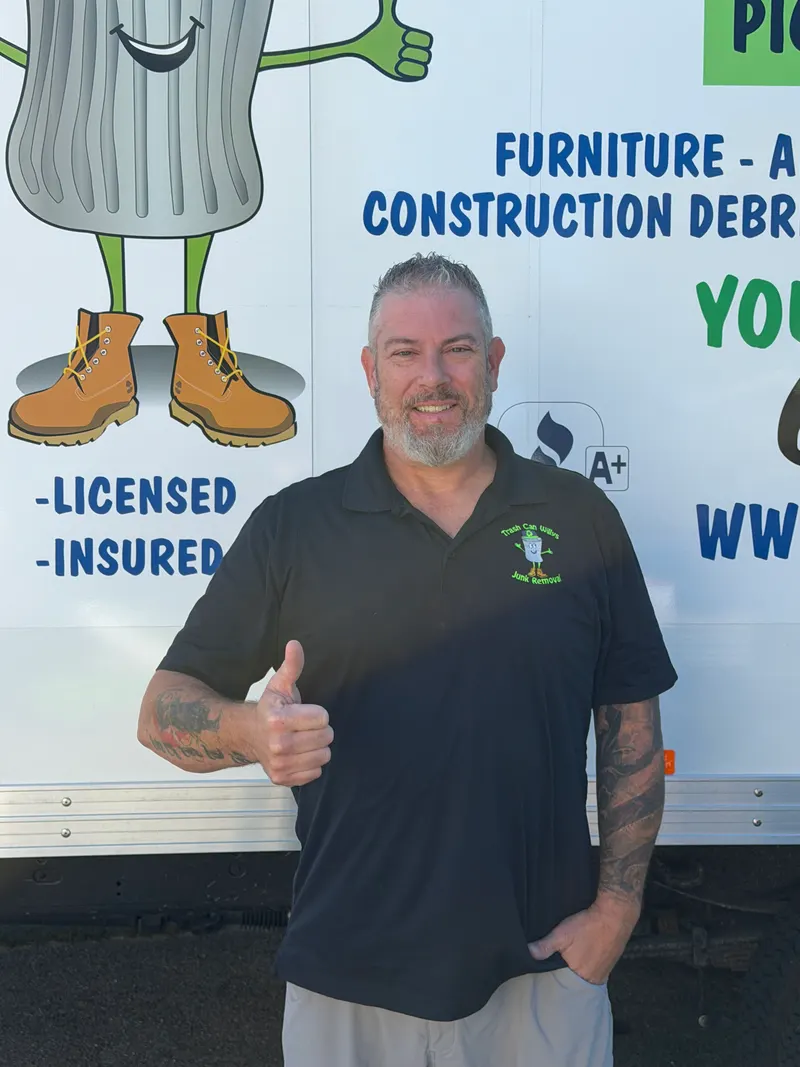
Steve Heimsath
Owner, U.S. veteran

Anthony Laperle
General manager

James Diaz
Assistant manager
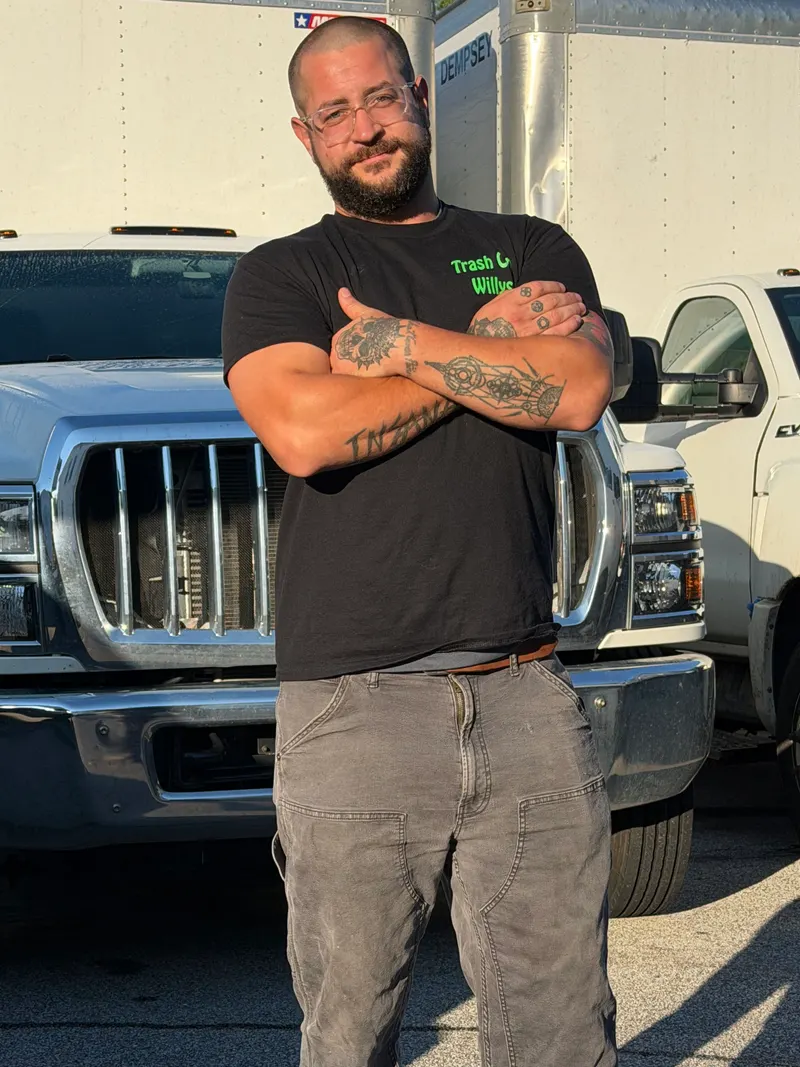
Nicholas King
Crew, U.S. veteran
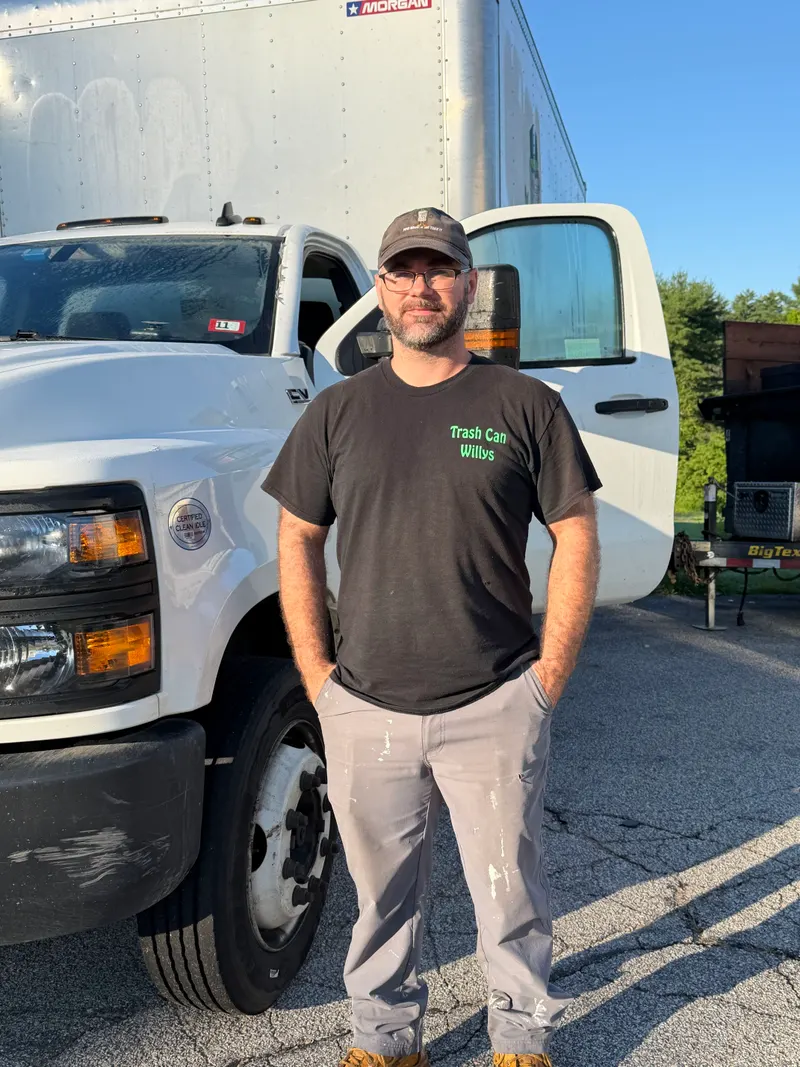
Austin Nephews
Crew, U.S. veteran
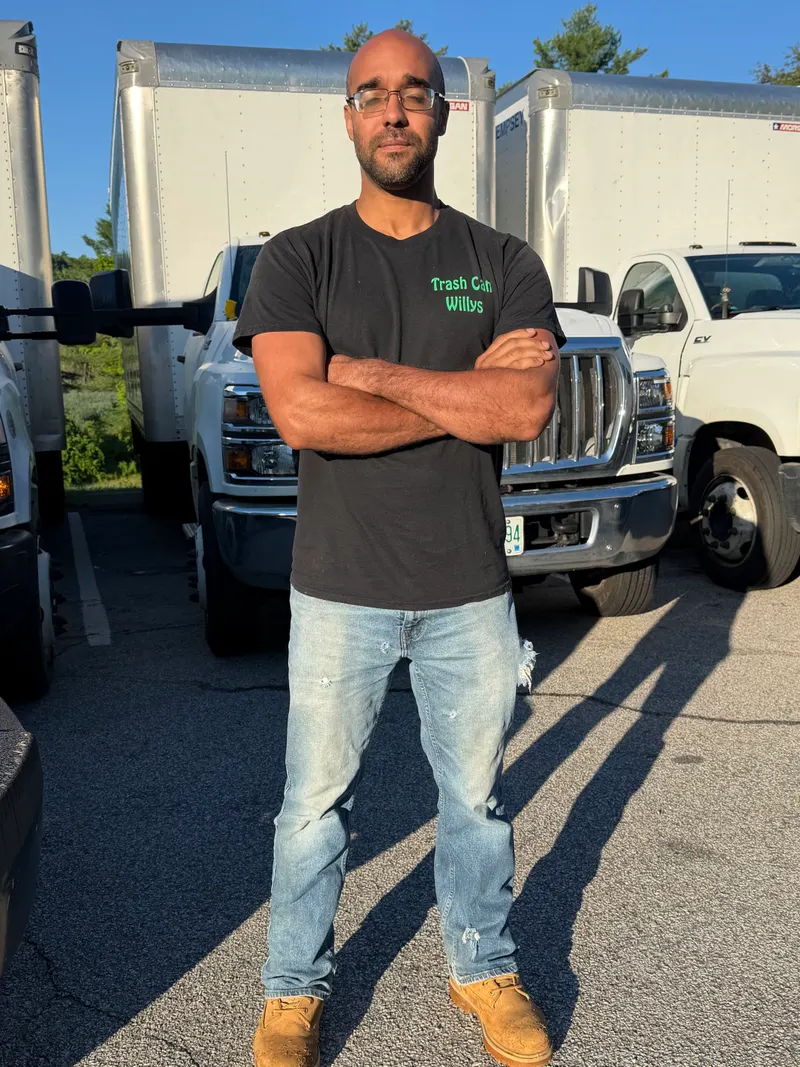
Kyle Mullins
Crew
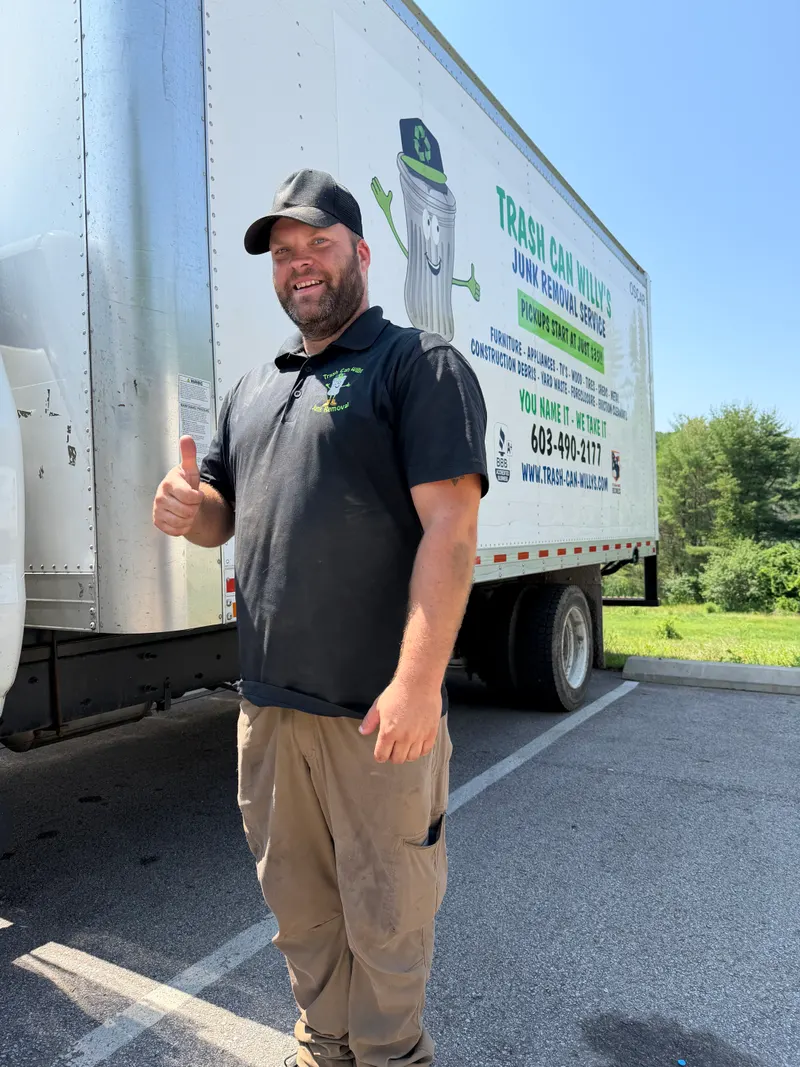
Matthew Frost
Crew
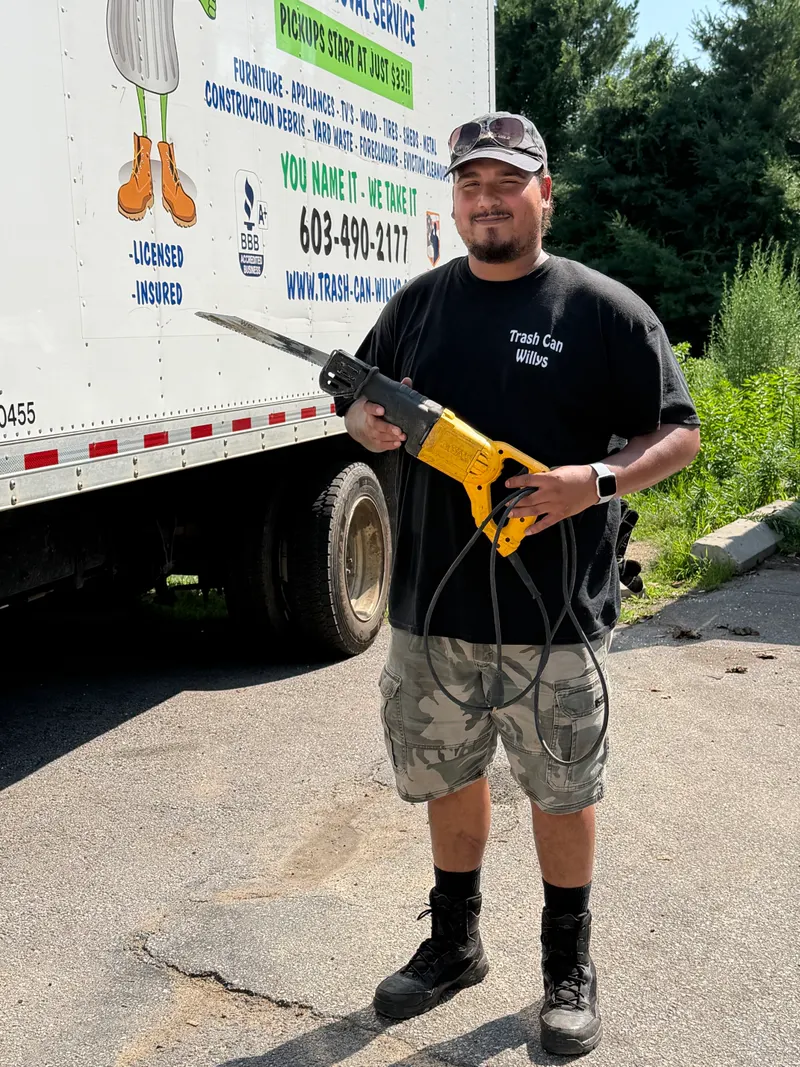
Marcos Rosas
Crew
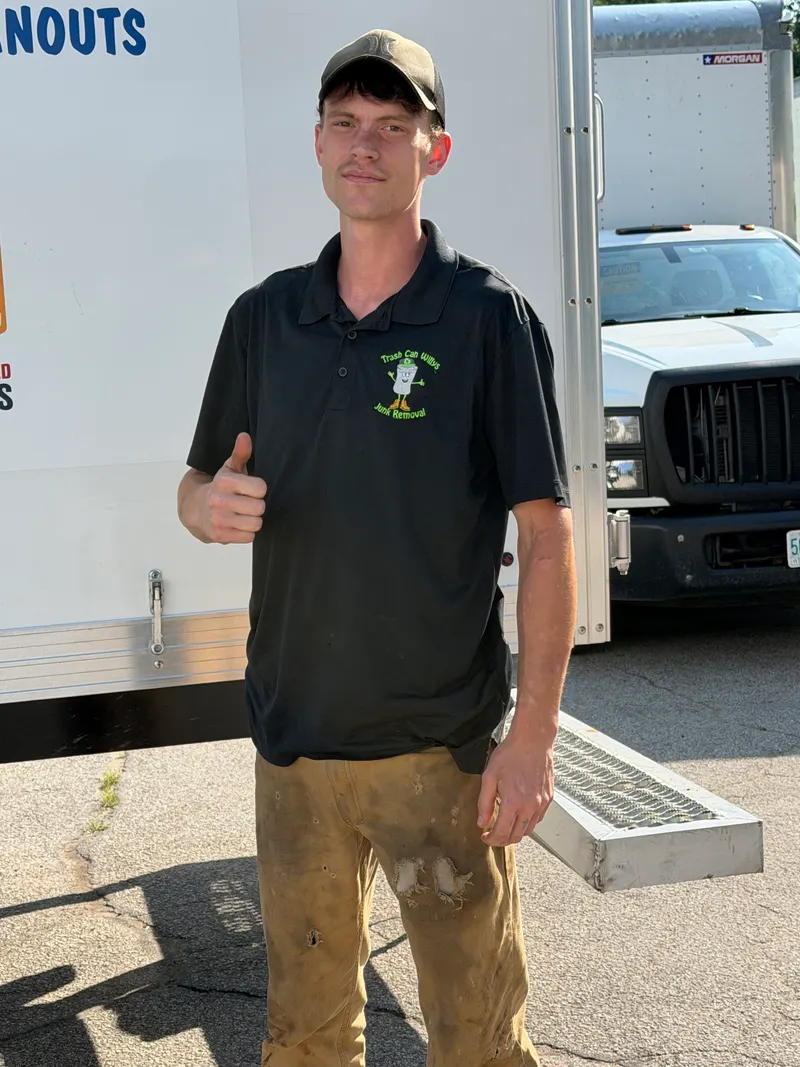
Brad Brooks
Crew
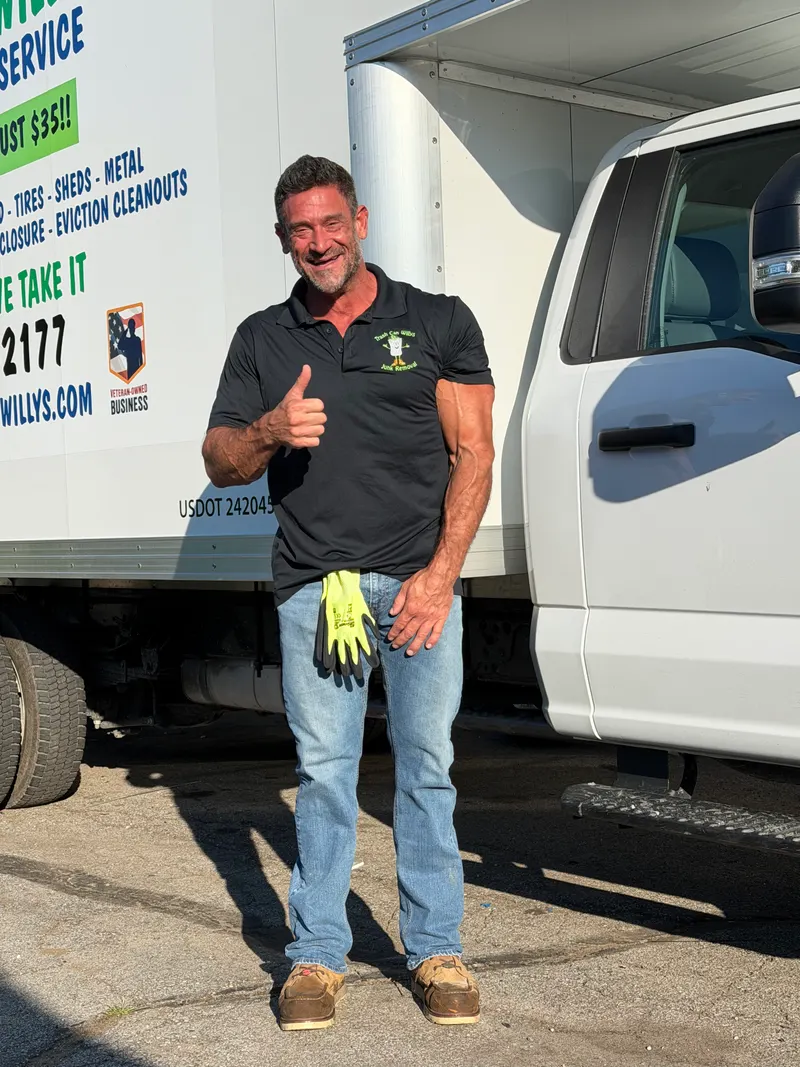
Seth Shackford
Crew
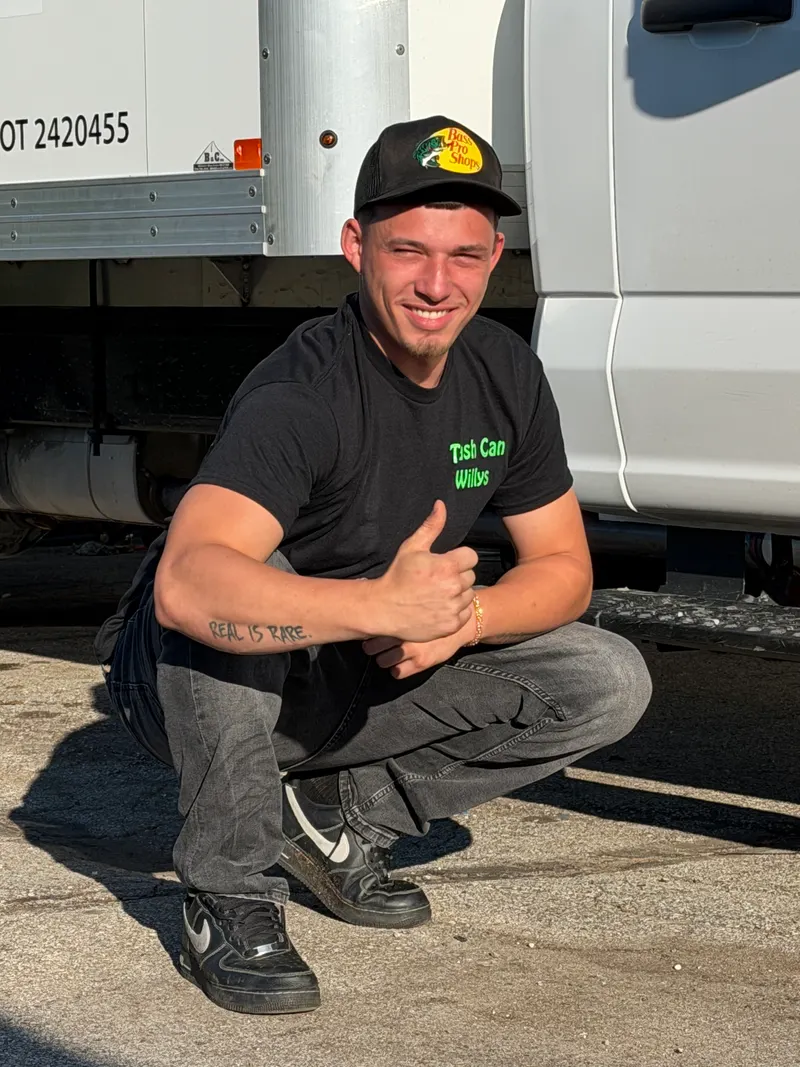
Xaiver Melendez
Crew
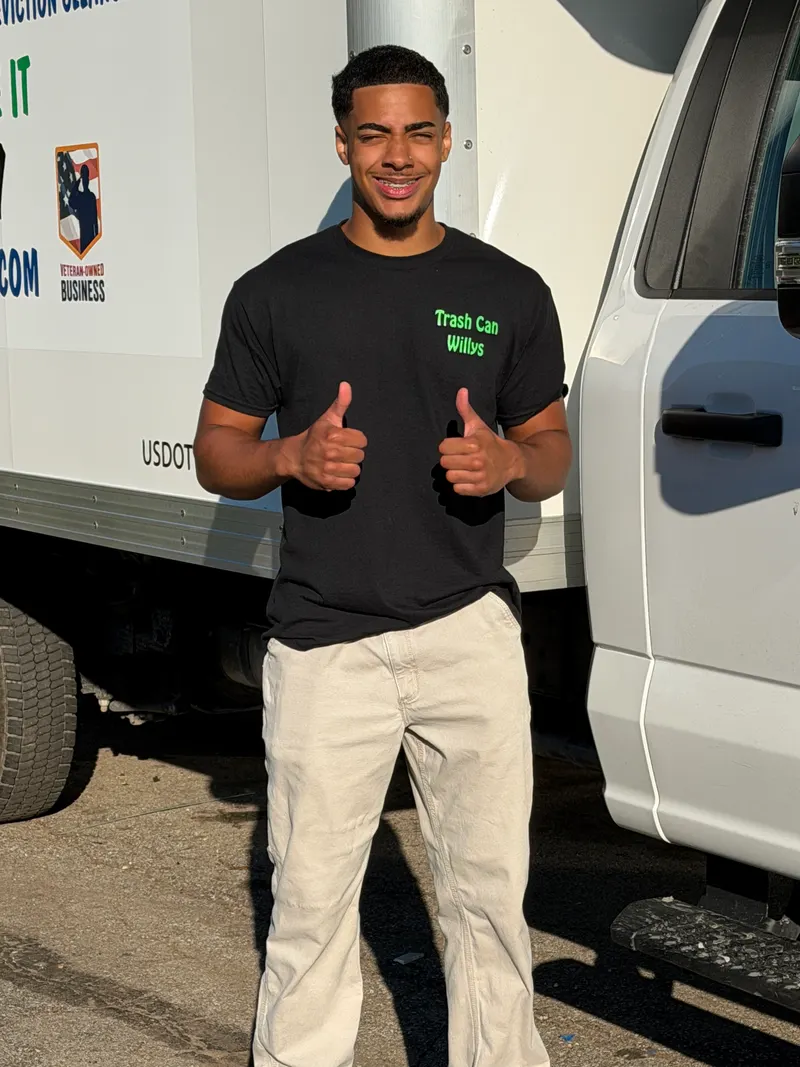
Rashid Conteh
Crew
Service Areas
Junk removal across NH & MA
Proudly serving homeowners and businesses across Southern New Hampshire, Greater Boston and the Merrimack Valley from our home base in Hooksett, NH. Same trucks and crews across the whole map, and if you're on the edge of it, call anyway. If the truck can reach you, we can haul it.
Trucks run daily routes through Hillsborough, Merrimack, Rockingham and Strafford counties in New Hampshire, and Middlesex and Essex counties in Massachusetts.
Zip codes serviced
01701 · 01702 · 01752 · 01760 · 01801 · 01803 · 01810 · 01830 · 01832 · 01835 · 01840 · 01841 · 01843 · 01844 · 01845 · 01850 · 01851 · 01852 · 01854 · 01860 · 01867 · 01876 · 01879 · 01880 · 01887 · 01913 · 02108 · 02109 · 02110 · 02111 · 02113 · 02114 · 02115 · 02116 · 02128 · 02129 · 02134 · 02135 · 02138 · 02139 · 02140 · 02141 · 02142 · 02199 · 02215 · 02451 · 02452 · 02453 · 03031 · 03038 · 03051 · 03052 · 03053 · 03054 · 03055 · 03060 · 03062 · 03063 · 03064 · 03076 · 03079 · 03087 · 03101 · 03102 · 03103 · 03104 · 03106 · 03109 · 03110 · 03246 · 03301 · 03303 · 03801 · 03820 · 03839 · 03867 · 03868
Towns we serve

New Hampshire

Massachusetts
Don't see your town or zip? Call 603-490-2177.
Free Instant Quote
Get a free instant quote for your junk removal
Same-day pickups available across NH & MA.
Upfront Pricing
You approve the price first.
Veteran Owned
17+ years, trained personnel.
Free Quote
No obligation, no pressure.
Rather just talk? Call or text 603-490-2177.

Sending your request
FAQ
Junk removal questions, straight answers
Why not just rent a dumpster?
Most dumpster companies charge extra for mattresses, most will not allow TVs or electronics at all, and you cannot put landscaping material in one. We take all three, we do the loading, and there is no container sitting in your driveway for a week.
How much does junk removal cost?
Our service starts at $35. A full load is priced on the weight we have to dispose of, the labor time and how hard the items are to reach, never on how much truck space you fill. You get a guesstimate when you call and the crew confirms the exact price before anything moves.
How soon can you come out?
Fast. Same-day or next-day is often possible, either a scheduled pickup for a small or medium job or an in-person estimate for a larger one.
What junk do you take?
You name it, we take it: furniture, appliances, electronics, mattresses, yard waste, construction debris, one item or a whole house. Two or three strong guys and a 20 foot box truck handle nearly all of it.
Do I have to move anything to the curb first?
No. You point, we take it. Two or three of us come depending on the size of the job and we do all of the work: out of the basement, down the attic stairs, around the landing, into the truck. You do not lift anything and you do not drag anything outside. We sweep the space broom clean before we leave.
How do you quote a job?
Call or text 603-490-2177 with a description or a few photos and we give you a price range on the spot. That phone quote is our best guess, not a binding number. When the crew arrives they look at the job and confirm the exact price before any work starts. Once you approve it, it does not change. For big jobs and full cleanouts we come out for a free on-site estimate, Monday to Friday 9 to 5.
Do you beat other quotes?
Yes. Bring us any written estimate from another company and we beat it by up to 10%. And every week we draw one customer's completed job and refund it in full, so keep your receipt.
Do I need to be home?
Not if we can get to the stuff. Plenty of jobs are booked by phone, hauled while you're at work, and closed out with photos and a card payment. If access is tight or you want to point at things yourself, be there and we'll walk it with you.
When will you actually show up?
You get a two-hour arrival window and a courtesy call about 20 minutes out, so you're not sitting around all day. Most single-item pickups are done inside an hour of the truck arriving.
What won't you take?
Hazardous waste is the short list: paint and stain of any kind, thinners, solvents, chemicals, poison and fertilizer, gasoline and other flammable liquids loose in cans or drums, propane tanks, acids, antifreeze, motor oil, fluorescent bulbs, asbestos and medical waste. We never take home heating oil tanks either. A mower, generator or snow blower with fuel or oil still in it is fine: we drain it as part of the job. Everything else, if two people can lift it and it fits in the truck, we take it.
How do I pay, and how does the $40 off work?
Credit, debit, cash, or estate, certified and business checks. No personal checks. You get an emailed receipt before the truck leaves. Mention the coupon when you book any job and we take $40 off the quoted price, one per job.